Should Humans Alter Genes… Yes
We live at an unprecedented point in time. History has never seen a point where humans had such an understanding of our genetic makeup. Medicine as a whole has developed so much we have involvement in its molecular structures. Yet with all these ramblings of human innovation, it seems problems of the past still linger in the present. Particularly, hereditary genetic disorders, passed generation to generation, are responsible for 41% of infant deaths. Throughout our time in history, we marveled at our technological innovations, yet were rightfully cautious to tamper with the building blocks of ourselves. However, with the knowledge we’ve amassed to this point, I think it’s time we allow ourselves to make changes we see fit.

One common dispute is people believing genetic alterations to be “too much human intervention”, however it is important that we shed such a primal mindset. If you hold such sentiments then you need to realize that all human developments in the medical world have already been “too much human intervention”. We see this specifically in the usage of genomics in the treatment of the lung disease Cystic Fibrosis.
“Cystic fibrosis (CF) is a multisystem disorder caused by pathogenic mutations of the CFTR gene (CF transmembrane conductance regulator). Pulmonary disease remains the leading cause of morbidity and mortality in patients with CF. The treatment of CF lung disease is experiencing a period of rapid evolution, supported by well-designed clinical trials and improved understanding of the genetics and pathophysiology of the disease. Undoubtedly, these advancements are responsible for a substantial portion of the improvement that has occurred in patient survival, which has been accelerated by the introduction of the highly effective CFTR modulator combination elexacaftor-tezacaftor-ivacaftor (ETI)” (Simon. M.D. 2022).
If we denied ourselves the ability to meddle with our “natural” bodies then unfortunately we would be allowing people with genetic disorders to go through the difficulties of illnesses they had no power against preventing.
Furthermore, we could potentially reduce the environmental impact of genetic diseases. Conditions that require lifelong medical interventions, including organ transplants or medications, can be resource-intensive and contribute to environmental stress. Reducing the prevalence of such conditions through gene editing can have a positive impact on healthcare resources and the environment.
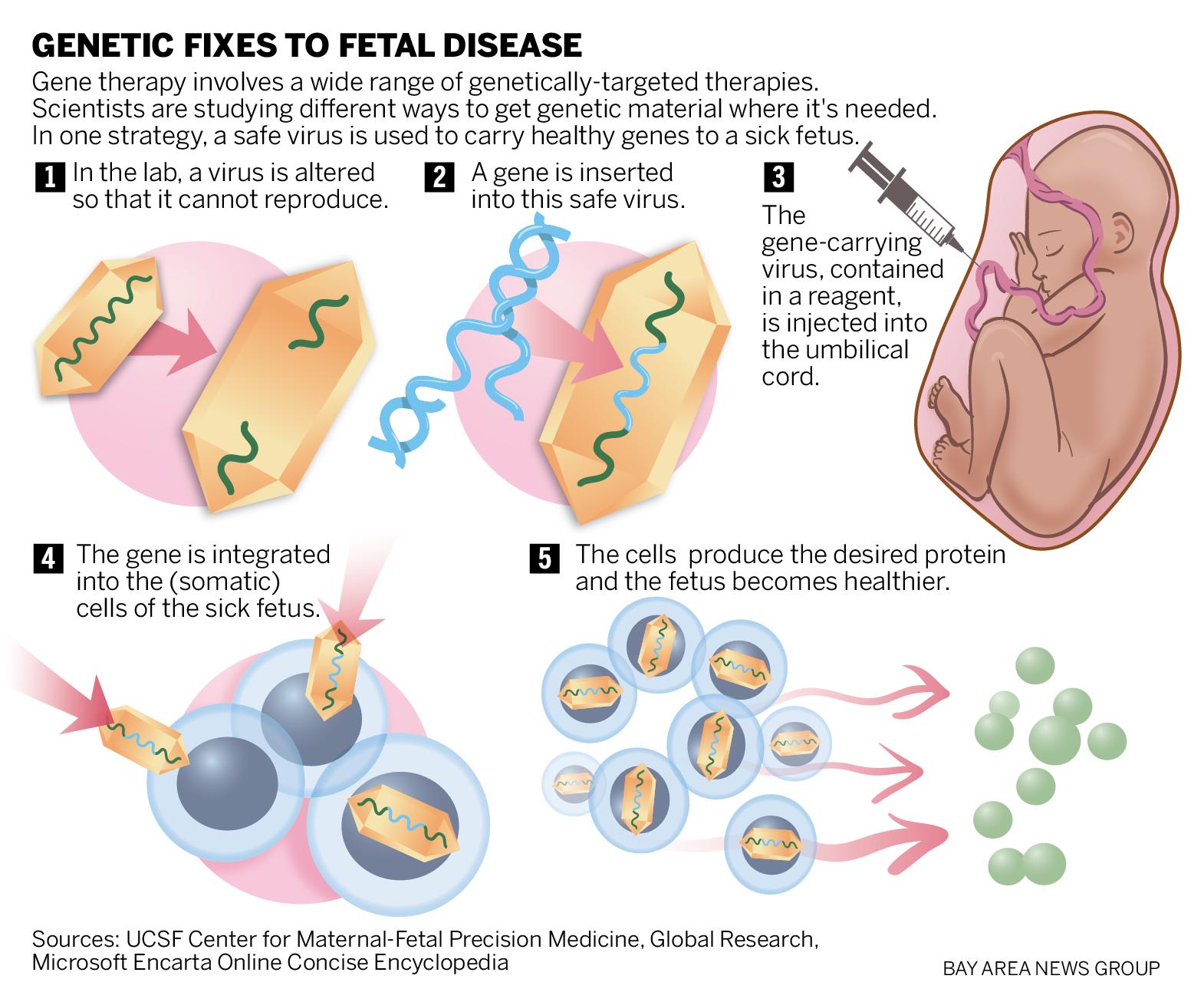
However, we could take a more proactive approach to situations like this by instead, investing our time and effort into altering the genetic makeup of the fetus itself. We have already seen an early stage of this through the use of CRISPR.
CRISPR stands for Clustered Regularly Interspaced Short Palindromic Repeats. Composed of a CAS9 protein and a guide RNA, CRISPR can edit genes as it can splice out unwanted DNA sequences. Firstly, the DNA sequence is identified. Then, the guide RNA, with a complementary DNA sequence, binds to the target DNA sequence. Finally, the CAS9 enzyme finds the correct spot, binds to the guide RNA and cuts both strands of DNA. This process specifically can result in deletion or mutation of DNA, however there are also variations of CRISPR that pertain to the insertion of DNA as well. When applied to the nucleus of an embryo, we can analyze the genetic makeup of the children, being able to remove unwanted information.
“The most profound ethical question about CRISPR is how future generations might use the technology to alter human embryos. This notion was simply a thought experiment until 2018, when He Jiankui, a biophysicist in China, edited a gene in human embryos to confer resistance to H.I.V. Three of the modified embryos were implanted in women in the Chinese city of Shenzhen.” (Zimmer, 2022).
As seen, we are able to add resistances to embryos, overall improving their health. However issues of morality are what constantly prevent the widespread use of this technology, despite us knowing of the upsides. Holistically, we are currently in the early development of employing these methods, as countries begin to experiment with CRISPR more often.
“The studies went from using non-viable embryos to using ones that could conceivably be implanted. Some tested new gene-editing techniques or combined gene editing with cloning. Others verified gene editing’s ability to correct mutations associated with genetic disease and analyzed genes important in early embryo development, including some implicated in the failure of some pregnancies.” (Cyranoski, 2019)
Additionally, gene editing could enable humans to push the boundaries of their genetic potential. Opening doors to enhancing traits related to intelligence, athleticism, or creativity, potentially allowing humanity to evolve and adapt in ways that were previously unthinkable. Potentially leading to breakthroughs in various fields and elevating human capabilities to new heights.
This goes hand in hand with another point of allowing parents to have more control over the genetic traits of their children, within ethical boundaries.Now obviously this is a subject that often raises eyebrows as a lot of people deem it unethical to tamper with the natural process of birth. However, as previously stated, all human developments in the medical field have already gone against the “natural processes” of life. Moreover, it enables informed parental choice and family planning, which can lead to more fulfilled and happier families.
Also, while we’re arguing the ethics of this procedure, it is important to note that some alternatives to gene editing are just as, if not worse morally than gene editing. Proponents of gene editing embryos argue that it can be a more ethically sound approach than other reproductive technologies, such as selective abortion.
Instead of terminating pregnancies with fetuses carrying severe genetic disorders, gene editing offers a way to address the issue at its source, in the early stages of embryo development, showcased by the developments of CRISPR.
Primarily, I believe the fear of gene editing stems from nobody wanting to be the “test subject”. This is a sentiment many Americans, myself included, wholeheartedly agree with. However this technology will never be applied without 100% insurance in its safety. Which is why the 30% of parents that agree to gene editing shoots up greatly when asked if they would still deny the procedure after it’s already been proven and employed.
“Although Americans are closely divided over whether they themselves would want gene editing to reduce the risk of disease for their own baby, a majority thinks that most parents would feel pressure to get this type of gene editing. Nearly three-quarters (73%) think most parents would feel pressure to get gene editing to reduce their baby’s risk of developing disease if its use becomes widespread. Far fewer (25%) think most parents would not feel pressure to use gene editing for their baby.” (Rainie, 2022)
As made evident by the article, the turnaround of parent’s that believe they will eventually be pressured into gene editing their baby in order to avoid disease.
“It is now clear that scientific advances are narrowing the biological and therefore ethical and legal gaps between embryo models and embryos. In the future, embryo models may pass a “tipping point” after which, in our view, most of the ethical distinctions with an embryo would disappear and there would therefore no longer be reason to value and regulate embryo models differently from embryos.” (Rivron, 2023)
The ideal world will be one where we are so sure in our ability to edit genes for the better, that all embryos will be looked at as a canvas. Barring unethical alterations, we should be able to create the “model” embryo, free of genetic disorders.
All in all, it’s important to note that while gene editing embryos holds great promise, it also raises important ethical, safety, and regulatory concerns. The responsible and ethical use of this technology, as well as appropriate oversight and guidelines, are crucial to ensure that the potential benefits are realized without causing harm or unintended consequences.

